← BibliothèqueToutes les vidéos
Tech.Rocks Summit 2023
The truth about change
- Dawn Baker (CTO, Back Market)
Tech.Rocks Summit 2023 · 7 décembre 2023 · 34 min · en anglais
Résumé
Le changement est une constante à laquelle nous sommes tous confrontés. Qu'il soit organisationnel ou technique, la façon dont il est conduit peut faire la différence entre le triomphe et le désastre. Dawn Baker explique pourquoi, comment et quand appliquer les pratiques de conduite du changement pour maximiser les chances de succès.
L’essentiel
La CTO de Back Market relit les grandes ruptures technologiques des trente dernières années pour montrer qu’il faut s’adapter au changement, puis raconte comment son équipe d’ingénierie a repris la main sur le sujet de l’IA générative face à la pression du business.
Pour discuter de la manière dont une équipe tech peut piloter l’arrivée de l’IA générative dans l’entreprise plutôt que la subir.
Les idées clés
- Ceux qui ne s’adaptent pas sont laissés de côté. Dawn Baker rappelle comment Internet, rendu accessible par un navigateur gratuit, la recherche, les réseaux sociaux et l’iPhone ont chacun transformé les entreprises ; pour l’IA générative, elle estime qu’on ne sait pas encore si ChatGPT sera Facebook ou MySpace. à 6:47
- Reprendre la main plutôt que subir. Chez Back Market, le business multipliait les preuves de concept, tandis que la sécurité et le juridique freinaient ; un premier avertissement (ne pas mettre de données de l’entreprise dans ChatGPT) a été perçu comme un manque d’enthousiasme. L’ingénierie a alors déclaré qu’elle pilotait le sujet de l’IA, confié à un staff engineer data et au manager de la data science. à 15:17
- Devenir l’expert de l’IA dans sa propre entreprise, bâtir une stratégie, éduquer le business, exécuter (hackathons sur les données produit, les images ou le service client) et communiquer sans relâche. Un comité de gouvernance de l’IA, avec toutes les parties de l’entreprise, se réunit chaque mois. à 19:07
Questions pour votre équipe
- Qui pilote aujourd’hui le sujet de l’IA générative dans notre entreprise ?
- Quelles expérimentations d’IA menées hors de l’équipe tech devrions-nous connaître ?
- Comment rendre compte régulièrement au reste de l’entreprise de nos choix sur l’IA ?
Il s’agit d’un talk de type keynote, fondé sur l’expérience d’une seule entreprise au début de sa démarche, en 2023. Aucun résultat chiffré n’est présenté, et les rappels historiques sont donnés sans sources.
Chapitres
Summary
Change is one constant we all face. Whether organisational or technical, the way changes are managed can make the difference between triumph and disaster. Dawn Baker explains why, how and when to apply change management practices for the greatest success.
Thèmes : Management & organisation
Transcript complet
Transcription automatique, à relire : les noms propres peuvent être mal orthographiés.
Je vous laisse tranquillement nous retrouver, vous installer aux places qui vous sont dévolues. Je vois qu'il y a encore un petit peu de monde. N'hésitez pas à vous installer relativement rapidement pour qu'on puisse démarrer. La deuxième partie de cette matinée, c'est au premier rang. Comme ça, je ne suis pas toute seule. Mais restez au premier rang. J'aime bien quand je ne suis pas toute seule. Je vais essayer. Merci. Merci. Voilà, je vous demande de rentrer de manière un tout petit peu plus véloce, s'il vous plaît. Merci beaucoup. Très bien, et je vais appeler avec moi sur scène Romain et Manon. J'ai très, très envie de vous présenter Romain et Manon, histoire que vous les identifiez bien, parce qu'ils vont faire un talk de deux heures tous les deux pour vous, dès maintenant, pour nous emmener jusqu'au déjeuner. Viens vite, Manon. Où est Romain? Romain, tu arrives? Viens, Romain, voilà. Alors, pourquoi j'ai envie de vous présenter Manon et Romain? Je vais réclamer votre attention, s'il vous plaît, histoire qu'on soit vraiment bien en collectif tous ensemble.
Voilà, donc Romain et Manon, qui, ça ne vous aura pas échappé, tiennent dans leurs mains un micro. Qui vont vous être mis devant la bouche pour ceux qui souhaiteront poser des questions. Alors, quelques petites recommandations préalables aussi. Vous m'arrêtez si je dis... des bêtises tous les deux, d'accord ? Donc, quelques petites recommandations. Pour les questions que vous avez à poser à nos speakers, levez la main et surtout attendez bien que soit Romain ou Manon viennent près de vous pour vous tendre le micro parce qu'en fait, nous sommes suivis aussi en ligne. Et si jamais vous posez votre question sans micro, on n'entend pas la question. Alors vous me direz, bon, finalement, c'est la réponse qui est plus importante que la question, mais quand même, c'est super sympa pour ceux qui nous suivent à distance d'avoir aussi vos questions. Vous serez assez fermes tous les deux là-dessus, on est d'accord. Donc vous attendez bien que Romain ou Manon viennent jusqu'à vous avec les micros. Merci beaucoup à tous les deux et on est une team, we are together. Voilà, super. Ça va? C'était bien la pause? On a networké, on est au workshop. Qui est au workshop? Merci.
Qui a networké? Ah ouais, voilà. On sait pourquoi vous venez. Très bien. Eh bien, écoutez, on va démarrer tout de suite avec notre prochaine speaker. Elle s'exprime en langue anglaise. Elle est CTO et son organisation a montré que le reconditionner, c'était fun. Vous voyez à qui je fais allusion? Très bien. Dans l'exercice du taux qui lui est réservé, elle va nous dire toute la vérité, rien que la vérité, à propos du management du changement. Je vous demande d'accueillir Dawn Baker, la CTO de Back Market. Dear Dawn, you Dawn't want to come, Dawn? No. Nice to meet you. Very happy to welcome you for this Tech.Rocks summit. So floor is yours now. Thank you so much. You have the remote. Yes. So I like to start with this image of a river, because the thing about rivers is if you put your foot in it, or your hand, every second it's a different river, right?
It's moving all the time. There's always change happening. And not only is the river changing, but it changes the landscape around it as well over time. Technology is always changing as well. And I think it's a great metaphor for thinking about how things change over time. And that we have to adapt to it as it goes along. Because if you Dawn't adapt, you get left behind. We have to adapt to change to stay competitive. To continue to be relevant, to attract talent, and to succeed. When we think about changes that happen in our everyday world, especially as we deploy new software, turn feature flags on and off, do version upgrades, library upgrades, these are kind of our routine changes. Mostly they go fine. Occasionally, we hit some rough water, we have to adapt, we have some outages we have to explain, things get a little rough and we have to adapt to how we manage change to make sure that it gets better the next time.
But every once in a while, we come across something that is really a major shift. And we're not so prepared for it. And you have to be ready for something explosive to change, right? And you don't know what's coming and how you're going to manage it. And today, that topic is generative AI. Earlier this year, kind of, came at least in my org as a business topic. The business was bringing it to us. And we ignored it for a little while. We had a lot of other stuff going on. We have a full product roadmap we have to deliver. There's... Pressures from the business as well to deliver that roadmap, who is at the same time saying, but look over here at this generative AI thing, and we need to catch up and do some work in that area. So how do you manage change like that, right?
And for all of you, how many of you today Show of hands, is Gen AI a topic in your business? Almost everyone, right? You can't go to a conference today either where it's not being woven into the topic, right? Where you can't escape it. It's in your face. It's there. So let's talk a little bit about, today I'll talk a little bit about how back market is handling this change. Even though we didn't start out handling it. To do that, we can take a look back at some of the major shifts in technology over the last 30 years and what has happened with businesses over time in response to those changes. It's always good to take a look back and learn a little bit from the past. So, of course, the Internet. We'd not all be here at all if it wasn't for the introduction of the Internet. The Internet became public in 1993, publicly accessible.
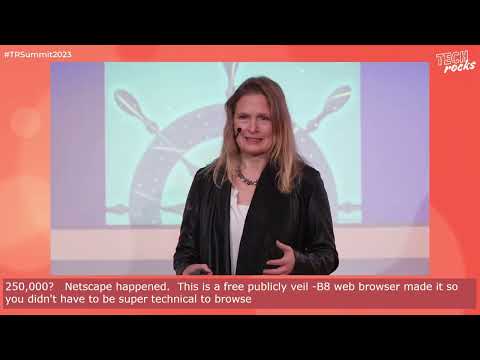
And by the end of that year, there were just 130 websites. Not a huge shift yet. But then by 1996, there were almost 250,000. What happened? Why was there only 130 and then 250,000? Netscape happened. This was a free, publicly available web browser. It made it so that you didn't have to be super technical to be able to use the Internet. If you had a computer, you could download the browser, and it could make it work for you. And so access to this is what created a huge shift in culture, created a huge shift in business. Businesses now had to pivot because they needed to go online if they wanted to compete to get market share that was now just waiting for you. You can get people from a thousand kilometers away that would never have come to your store.
Never known about your business, never known about information that you have to share. Information becomes easier to access with Google. Google makes search easy, makes it accessible, organizes information so people can find things much easier. It again shifts business because businesses now have search engine optimization to care about. It's very, very important if you want someone to find you that you have someone taking care of that in your business. It changes the way companies advertise. Advertising online, you know, people, billboards and newspapers and things like that are becoming less and less important because the reach you have online is so much larger. This part, as the internet grows, it gives rise to social media.
And another pivot in the way that people interact with technology and the way businesses interact as well. And this is also an example All of these so far actually are examples of if you don't change, you get left behind because nobody's using Netscape today, really, right? In social media, MySpace and Friendster were really the pioneers in that space, but they're not who you think about today. Those companies aren't top of mind when you think about social media. It's Facebook and Twitter and now TikTok and things that continue to come. And these are companies that continue to change and evolve with time. MySpace changed direction. They focused on ads and ads revenue, and they left the floor open for someone else to come in.
So Facebook comes in, changes not only the way that people connect to each other, it changes the way they get news and information, for better or for worse. It changes the way companies acquire customers, right? Because now you can advertise on Facebook, And in one click, people can log in into your account, into your site, through their Facebook login. And companies have built these integrations and adapted to that to be able to expand their reach. So it's a very kind of game-changing thing that has happened. And then we have the iPhone that comes after that. Now this has changed the face of personal computing. It's in your pocket. It's gone from something you have to carry around to something that you can have with you all the time. And people have it with them all the time, right? If you don't have your phone, you miss it. And so... Creates again a whole new business category.
There are companies that only exist in apps today, and in some cases they don't have a web presence. They wouldn't exist if it wasn't for the introduction of the iPhone. The other cell phone companies all had to pivot, and some of them also got left behind. You don't hear so much about Nokia anymore. We're left with Samsung, Apple, and then a whole bunch of other Android companies that have come along after. Changes, all of these things have changed the kind of jobs that exist. We have mobile engineers, we have digital marketing, we have people who specialize just in social media. Who specialize in the support you give to your customers through social media. There's so much change that has happened in just this time. And so the next big shift is upon us. What has come is ChatGPT. We are, earlier this year, the release of ChatGPT 4 kind of blew up.
Everything that we've been thinking about from our roadmaps and the way that we do business. What's it going to look like? We don't know. Is ChatGPT Facebook or is it MySpace? We don't know, right? We're just trying to adapt as we go along here. So if we think about how this changes the face of how we do our jobs every day, how we incorporate AI at all. Because AI isn't new, right? We've been using it for years and years. We have algorithms that we use. We have chatbots that are in use, search and recommendations on our sites. Predictive analytics, like so many ways in which we use it, we just haven't been calling it AI so much, right? We call it... data science and machine learning and other terms that people who aren't technologists don't really understand that well. And so we've had to change our language a bit and be able to relate to the business in a different way.
So disruption isn't new, but the speed and complexity and global nature of disruption is at a scale that we've never seen before. In a game where the rules and goals are constantly changing, the long-term winners aren't those who simply try to make it to the next level, but the ones who continually adapt. This quote could have come to you, you could have seen it probably in 1995, 2002, 2008, last week, right? It's been true for 30 years. It's from an article in 2018, and I'm sure it's not the only one of its kind, right? This is a theme over the last 30 years for sure. So let's talk a little bit about back market and how back market is adapting to the AI shift. To start again, we were, as an engineering org, reacting very much to what the business was bringing to us.
We had a set of business users who were banging on an engineering store saying, we've got to start using generative AI. Have you seen this chat GPT thing? It is so cool. And all these things that you can do with it, it's amazing. They're like, yes, we know AI. And they said, no, no, no, no, no, but we are falling behind. Other companies are starting to use it. We're not using it. We've got to get on it. We can make our customer support better. We can make our search and recommendation engine better. We can do all these things, and generative AI is the answer. And we were saying, well, you know, there's different kinds of AI. We actually are. are using it sometimes already. We have algorithms. We have search and recommendation. But the businesses don't understand AI. They understand chat GPT. And they're saying, why aren't you more excited about it? We want you to be excited. We should be excited. We, of course, have security and legal constraints.
And we have a security part of engineering and a legal team saying, be careful, quiet. We don't want to do too much here. A lot of risk for the business. So what we did was we issued a warning to the whole company. And we said, by the way, great that you're using ChatGPT, but don't put any company data in there. Don't share our IP with a publicly available model, please. And also... Maybe just only use the company version, right? We have it built into our single sign-on. Use only our license version. Don't use the one you've created on your personal account. To which the business said, it doesn't sound like you're very excited about generative AI. But, you know, we're engineers, and so we, despite the business, going off and doing all their own proof of concepts, which they were doing, because it's a little too easy for them to use JotGPT.
And so they're like, we could do this, we could do this, and they're trying all different things. So in engineering, we said we better do a few things as well. We have this roadmap, but we did a few experiments and hackathons and tried to do some work on it, but the shift hadn't really been made. We were doing it kind of quietly, kind of on the side. But the business continues to give us pressure, security and legal continue to give us pressure, and we had to take a step back and think about this. So here we have the business saying, do this super technical thing and do it now. And we don't understand it, but we know ChatGPT works, and it works for us, so it will work for everything. And we were thinking, well, should the business really be leading that conversation? Probably not. This is an engineering topic. We should be owning this. And so...
Just made a declaration and said, from this point on, engineering will own the AI topic at Back Market. And we had one of our staff engineers in the data engineering team, and the manager of our data science team, team up, and they are now directing the topic of AI at Back Market. Because the business was creating quite a lot of chaos. There was three or four proof of concepts being led by the business on generative AI that engineering can't ignore. We get pulled in anyway, so we might as well drive it. And that was frustrating not only the engineers, but also the business, because they weren't getting done what they wanted, and the product management team, because their roadmap wasn't getting done, because we're distracted by AI. So we teamed up also with product and said, we need a strategy. Let's build one. And so there's this wave coming at us, and you can either pretend it's not there and it's going to roll you over,
or you can grab your surfboard and enjoy the ride and bring all your team along because you're going to need everybody on this one. It's the same level of business pivot that we're talking about year after year in history here. So take the lead. Say, we are owning this. You can trust us. We're the people who know technology in the business. This is technology. And let us help steer this in the right direction. So we did a bunch of research. We dove in and we became the experts. Not the experts on AI, not the experts on Gen AI, the experts on those things in back market. We just have to know more than the business about it, right? So that they know that we know what we're talking about. Then we had to come up with a strategy. What are we going to do with it? How are we going to deploy the use cases that the business is coming up with? How do we tell them which ones they're really wrong about and which ones there's probably something there and what we'll do to figure that out more?
So we build up a plan and a strategy. Then we educate the business about it and say, okay, this is what AI really is. This is how we're using it. So don't think that we're not using it. We're already using it. This is how we can use Gen AI. And yes, Some of the ideas you've had about it are good. We're going to explore them. And this is how we're going to explore them. And we're going to tell you every step of the way. This is what we learned. This is what we found out. This is the direction it's going in. This has made them a lot quieter. So the chaos is subsiding quite a bit now. We are now in execution mode. We have had a number of hackathons. This has been a really great way to explore what we can use AI for. Can we use it to fill in missing data on our products? Can we use it to have better quality images? Can we use it to make our customer care agents faster and better at answering customer questions?
These are all things that we're exploring and making sure that we're heading in the right direction because every new technology that gets introduced, it comes across as this is going to change everything for you and it's going to be so much better, so much faster, but it's also going to cost more and it's going to require investment that you're not making now. And so you have to keep that in mind and balance those things. So today, we are at a place where engineering has stepped in and is steering the ship. But we have the rest of the company on board. It took a while, but they're moving in the right direction. They all know where we're going, why we're going there, and the places that we're not exploring, why we're not doing that. And there's data that we've collected along the way to back up what we've been saying all along. So I ask you to think about, and right now, how your company is approaching AI.
Can you think of things that you can explore, ways you can gain control of the conversation? Because I suspect we're not the only ones suffering from the chaos in all of this. First, so just to summarize the things that we've just talked about, if you can recognize the challenge that's there and the opportunity, it's a great start because you have to know what's in front of you. And if you see chaos, something's really creating a lot of noise, there's probably something there. And when you feel like you've moved into defense mode, maybe there's an opportunity there and you can flip it, right? Really the beginning. Take ownership, be in charge, because the more you have under your control, the more you can just guide the direction of how things go, maintain some focus, and
bring more value to your business in the end. Do your research, become the expert, get your strategy and plan together, educate everyone about it. Make sure people know what you're doing, why you're doing it, and bust some of the myths that are out there. And you have to execute on your plan so that people know that they can trust you. They know that you will deliver on what you said you would do. And you can't communicate enough about the progress you've made, the decisions that are getting made, and why you're making them. So that is how Back Market is dealing with AI. I think we're just at the beginning of our journey. There's a lot more to explore, a lot more for us to learn. We need to continue to direct the conversation, to own where we're going, and
remind ourselves and the rest of the company that this is an engineering topic, it's an engineering work stream, and they can trust us to take it in the right direction. Thank you. Thank you, Joan. So, yes. We're going to start the Q&A session. Do you agree? Do you agree on that? Yeah? Yes. Let's start. Okay, so we have Manon and Romain. Do you remember who is Manon and Romain? Okay, we have a first question here. One, two. Thank you. Great. Thank you. Thanks a lot for your testimonial. In the last years, we've seen new roles in companies appear. Chief technical officer, chief data, chief digital, chief product. Do you think that chief AI officer is a position that's going to appear in the next few years? That's a really interesting question.
I don't think it will come in the next two years because I think this is still a pretty young part of technology. And there's a lot of advancement to be made. I think this will end up under chief data officer in the immediate term. But if you project out beyond five years, I can see it as a possibility. Because if this is enough of a technology shift and enough of a specialty, it's going to break data science into factions, I think. Thanks a lot. Another question in the room, yes. Here you have a mine raised. A mine raised. Sorry. Thanks for the presentation. I have a question about owning or installing your own chat GPT kind of service in the company.
So most of the companies use Google, but they didn't try to install Google for them. They are sending data to Google or other services. What changed? Why everyone wants ChatGPT installed for them, but not Google for them? So I think part of this is the way the chat GPT model works. If you're using the public model, the private, the IP concerns you have about protecting your IP, I think are bigger than the ones that you have, something like Google, which is more your typical SaaS applications, right? So we did purchase a private model from OpenAI, and we built our own internal knowledge base. We applied it to our internal knowledge base so that it's called Monster.
And so you can get... use it chat GPT like across our own knowledge base and also use the functions of chat GPT to search the internet but on a private model for really to protect our own IP and to protect make sure that we're working within the confines of the security and legal constraints that we operate in as a business. And I think when you think about the services that we as a business consume from Google, those privacy things are built into your terms of service as with any SaaS application. Thank you, Dawn. Do we have another question in the room? Yeah, another one here, please. Merci, Manon. Thank you. Hi. Thanks very much for sharing your experience. My question is going to be about the people.
We, as tech leaders, we focus a lot on the technology, and you've given some great examples of that. How do you see this Gen AI thing influencing the way people work together inside the company? Because you gave a few hints about the change acceleration. Do you already see some trend in the day-to-day work on how people get organized to deal with this change acceleration? It's a very good question, I think. It is a good question, yeah. I think that it's changing the way that the speed at which people work, for sure, because there's, you can, if you want to just build a presentation, you can ask ChatGPT, I'd like an image that conveys this. What kind of image would that be? And it will give you three or four suggestions.
And so you can really speed up your, just your ideation process even. It has, at a minimum, has changed how people talk to each other, because I can't tell you how many meetings I'm in each week where someone's like, well, I asked ChatGPT this question about this meeting we're about to have. And it's a conversation starter at the very least, which is, I think, very interesting. And the... I think there may be some fears about the risk of people being more separated because they can be more independent. Like you can work more alone because you have this thing you can talk to. You don't need to talk to a person. Maybe. But what I'm finding is that it's actually sparking conversation about that experience and people are treating ideas in a different way and maybe just faster.
It's also the work that goes into, now we're training our own model, and things aren't working all the time, right? You don't always get a good answer to the question. There's a bit more education that we have to do with on the business side for people who aren't in the engineering org to understand why it doesn't work all the time and what we need from them to make it work better. And so I think it's up leveling the level of technical knowledge in people who aren't technologists. Just by the nature of it. And so that's an interesting shift that I think, at least I didn't expect out of this, that we would be doing a lot more technical education and people are more interested in it. Thank you, Dawn. So we have two minutes left. Is there anyone who wants to ask something directly to Dawn? Another question? Yes, two. Okay, so. A quick one, bouncing on what you just said.
Did you put in place any governance for the AI across functions? Yes, great question. We did create an AI governance. board and it includes people from every part of the business because every part of the business is using some version of chat GPT. I'd like to say that no one's using the public version right now, they're all using the internal one, but I can guarantee you that's not what's happening. But we need everyone bought in. So yeah, we have a governance board that's meeting monthly, and they put out monthly updates about what's going on around AI and Gen AI in the company. Okay, so we have the last one with Didier. Do we have a mic to Romain? The front row. Thanks for your call. Your talk, sorry. So there is a lot of shadow AI in many companies. So how we can use this shadow AI to change the company?
Yeah, great question. I think about making it safe for people to talk about that they're doing it. And probably the warnings we gave at the beginning that said, please don't do these things, maybe wasn't the best way to get access to what people were really doing. But asking people to join the conversation around how are you using it so we can create a way to leverage that internally with our own private model and do it more safely for the company, I think is the way to get it out, to get people to say, okay, this is how I'm using it. Because if we can make that application, take an application into our internal scope, and people will get better answers and they'll get them faster, and they're now contributing to how to improve that product, I think you engage them in a different way and you can get them out of the shadows. Thank you so much. Thank you very much.
Maybe we can conclude a little bit in French. What do you think about that? Je peux essayer. Can you say, je suis tellement contente d'être au Tech.Rocks Summit. Tech.Rocks Summit, oui. Thank you so much. Well, thank you. Nice to have you. Thank you so much.